If customers struggle to find your business on Google Maps, start by checking where the problem is. The profile may be missing, appearing for too few relevant searches or receiving clicks that lead to unanswered calls. Each situation needs a different response.
Local search engine optimisation (SEO) helps people find and assess a business through searches tied to a location. For an eligible business, the work includes providing accurate information, explaining its services and making it easier for suitable customers to get in touch. Your location and the businesses competing nearby also affect visibility. Google explains these limits in its local-ranking guidance.
Your Google Business Profile is the business listing you manage on Search and Maps. The website, customer reviews and other references to your business also have a role. For a service business, the work should help someone establish whether you can do the job and cover their area.
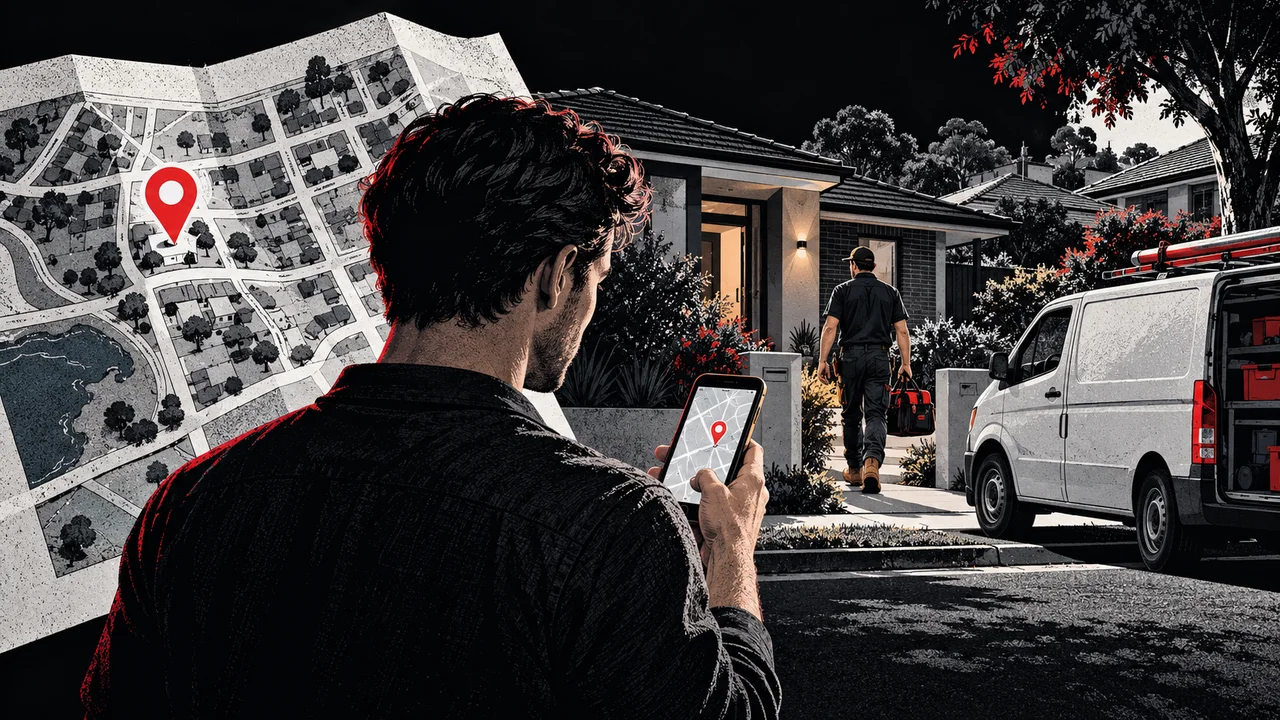
A Brisbane example: finding a plumber
Imagine a plumbing company that visits customers in a defined part of Brisbane and does not receive them at its home base. This example is hypothetical, not a Ranking Rebels client result.
Someone searching for “plumber Chermside” needs to check whether the company provides the service and can attend their address. The business needs a profile that reflects its operation, a useful service page and a phone number the team can answer.
The next step depends on what the team finds. If the business appears by name but rarely for that service search near its base, it checks categories, service fit and relevant information. If it is visible and phone clicks increase but calls go unanswered, responding to those enquiries becomes the priority.
Weaker visibility farther away calls for a review of distance and competition. Declaring more service areas does not guarantee a place in those results.
What local SEO can help your business achieve
A customer may need to establish whether you provide the service, cover their suburb, operate at the right time and have evidence they can assess. Clear information helps them decide whether to contact you. A working phone number, suitable enquiry form or booking route makes that decision easier to act on.
For the plumbing company, explaining its actual coverage could help someone recognise whether it can attend. Relevant photos and genuine reviews give the customer more information to assess. Keeping details accurate also gives the team a useful reference when the same questions come up.
Review the enquiries received to see whether that information helps. Check whether requests match your services and coverage, and whether suitable enquiries progress to quotes or bookings. Demand, competition, availability and follow-up all affect the result.
Keep the placements distinct. A business listing in Maps, a local business block within Google Search, a website's organic result and an advertisement are different placements. They do not provide one universal ranking for your business.
First, identify which problem you have
Use this table to choose what to investigate first.
| What you observe | What to investigate first | What to avoid assuming |
|---|---|---|
| The business is difficult to find even by name | Eligibility, the existing profile, verification, status and accurate identifying information | That adding keywords will resolve a profile problem |
| It appears by name but rarely for a service | Categories, actual services, relevant pages and the businesses appearing for those searches | That the profile must be suspended |
| It appears near the base but less often elsewhere | Search location, distance, competition and realistic coverage | That listing every suburb guarantees visibility there |
| It receives actions but few suitable enquiries | Contact routes, response, offer, service fit and location fit | That profile clicks are already qualified leads |
| Suitable enquiries arrive but few become bookings or accepted quotes | Response, availability, quote process and follow-up | That more visibility will resolve the problem |
A sudden change also deserves a record of dates and events. Check whether information, verification, trading hours, campaigns or the business itself changed before assigning a cause.
Check eligibility before creating or changing a profile
Google Business Profile has eligibility rules. For most business types, eligibility requires in-person contact with customers during the business's stated hours. Google documents specific exceptions. It lists online-only businesses and lead-generation companies among ineligible cases. A website or business registration alone does not establish eligibility. Google's eligibility guidance.
For many service businesses, the important distinction is how they serve customers:
- A storefront business receives customers in person at a qualifying location with permanent on-site signage.
- A service-area business travels to customers and does not receive them at its base.
- A hybrid business receives customers at its location and also travels to them.
The profile should reflect that operation. A business that does not receive customers at its address should hide that address from customers on its profile. A virtual office or mailing address does not create an eligible branch. Coworking locations have specific conditions, including signage, receiving customers and staffing by the business during its stated hours. Google's representation guidelines.
The Brisbane plumber would therefore keep its non-customer-facing home address hidden. Serving another suburb would not, by itself, justify a profile for another location. Multiple-location businesses, practitioners and departments have additional rules to check against their circumstances.
Check for an existing profile and appropriate ownership before creating another. Keep business access and management responsibilities clear. Google's available verification methods depend on the business, so the options and timing can differ. Google's verification guidance.
Understand relevance, distance and prominence
Google describes local results in terms of relevance, distance and popularity, explaining the last of these under “Prominence”. It does not publish percentages you can apply to your profile. Google's local-ranking guidance.
| Principle | What it means | Practical implication |
|---|---|---|
| Relevance | How well the business matches the search | Describe the business and its services accurately |
| Distance | How far the business is from the person searching | Results can vary across locations |
| Prominence | How well-known the business is, with links, reviews and ratings among the signals Google mentions | Build genuine evidence and a reputation people can assess |
You can improve the information and evidence you provide. The searcher's location and competing businesses remain part of the picture. Google also states that a better local ranking cannot be requested or bought. Advertising is a separate activity.
What service areas actually tell customers
Google's service-area settings describe where the business provides services. The current help page allows areas such as cities and postcodes, rather than a radius, and up to 20 areas. It describes a general boundary of about two hours' driving from the base, with business-specific context and exceptions in the wider guidelines. Google's service-area guidance.
Choose areas the team can actually attend. Twenty is a configuration limit, not an optimisation target. Covering a suburb commercially and appearing in every search there are different things.
Improve the information customers depend on
Choose categories that describe the real business
Google confirms that categories affect local ranking. Choose a specific primary category that best describes the business, then relevant additional categories where appropriate. Categories are not a place to list every product or service. Google's category guidance.
Check the categories available in the actual profile rather than copying a list from an old article. Changes can also require verification, so record what was changed and why.
Services and categories have different purposes. Use the service editor where available to explain work the business actually provides, without assuming that every added service produces the same ranking effect. Google's service-editor guidance.
Keep essential details accurate
Use the real business name, correct contact information, suitable website link and accurate ordinary and special hours. The profile should agree with the operation customers encounter. Do not add search phrases to the name or imply availability the team cannot provide. Google's profile-editing guidance.
Check the contact route as carefully as the listing. The phone should connect to the right team, and someone using a mobile should be able to make a useful request. For our plumbing example, a form could ask for the suburb and a description of the job, giving the team enough information to assess whether it can help.
Use photographs and updates to inform
Images of real facilities, work or a team can help people understand what they are considering. Choose relevant material and keep it current. A photo count, geotag or daily posting schedule should not be sold as a guaranteed route to a Maps position.
Separate customer usefulness from a claim about a ranking factor. If a change appears to help, record the observation and other changes that occurred before drawing a conclusion.
Build a review process that respects genuine experience
Reviews give a prospective customer something to assess alongside your description of the service. Google also notes that more reviews and positive ratings can help local ranking, alongside other factors. Start with honest feedback from genuine customers, who choose whether to respond and what to say. Google's review and ranking guidance.
An official review link or QR code can make a neutral request easier to act on. A short message might say: “If you would like to share your experience, you can leave an honest Google review here.” Google's review-request guidance.
Invite feedback without filtering customers by satisfaction. Google prohibits incentives and selectively requesting positive reviews. Its policy also addresses pressure to review while on the premises, requests for specific review content and staff quotas for soliciting reviews. Leave the wording and rating to the customer, including whether they mention a suburb or employee. Google Maps contribution policy.
Respond where you can help, acknowledge feedback and address a practical issue. Keep private customer details out of a public reply. Google's guidance does not establish that replying improves ranking on its own.
A critical review is not automatically a policy violation. Google explains that removal depends on its policies, rather than whether a business dislikes the feedback. Google's review-reporting guidance.
Give the website a useful local role
A profile may be where someone discovers the business. The website can help them establish whether it fits their needs. The destination page should explain the relevant service, actual coverage, process, evidence and way to contact the team.
The website can also help people who arrive through other search tools. Our article on SEO in the age of ChatGPT and AI search looks at how service pages support that decision.
For the Brisbane plumber, that means explaining the types of jobs accepted, how to request help and what the team needs to assess a request. Clear coverage information also helps someone recognise when they need a different provider.
For a business with several genuine locations or different service needs, separate pages may be useful when each contributes meaningful information. Changing a suburb name across dozens of otherwise interchangeable pages is a different proposition. Google's spam policies address doorway pages and scaled content created to manipulate results without helping people. Google's spam policies.
Accurate details in relevant directories, genuine associations and other useful references can support a coherent public picture of the business. Prioritise references that customers might reasonably consult and relationships the business actually has.
Structured data can describe real business information on a website. Google's LocalBusiness documentation does not promise a Maps position, and its guidance does not guarantee display of features using that data. Do not publish a private address or invent a branch to fill a template. Google's LocalBusiness documentation.
Measure actions and commercial outcomes separately
Google Business Profile Performance defines calls as clicks on the call button and website clicks as clicks on the website link. Direction requests are requests for directions, rather than verified arrivals. Its data can include organic activity and Google Ads. Google's Performance documentation.
For our plumbing company, a rise in phone clicks would be a reason to check what happened next. The team would still need to establish which calls connected, whether the jobs fitted its service and which requests progressed.
| Measure | Useful question | What still needs checking |
|---|---|---|
| Profile visibility or observed search appearance | Is the business appearing for relevant searches and locations? | Coverage, measurement conditions and whether contacts later prove suitable |
| Phone or website clicks | Are people trying to take the next step? | Connected calls, actual sessions and duplicate actions |
| Valid enquiries | Are requests relevant to the offer and area? | Qualification, response and follow-up |
| Bookings or accepted quotes | Are opportunities progressing? | Attribution, capacity and commercial value |
Google documents a connection between Business Profile and Analytics that brings profile metrics into Analytics. Reporting has limits: multiple linked profiles are aggregated, and the documented history covers six months. Check the current help and account before relying on it for a report. Google's Analytics connection guidance.
Website tracking and commercial records can help connect parts of the journey. Keep enquiries, their source where known, qualification and later status distinct. The Analytics connection does not establish which individual click became a customer.
Review campaigns, seasonal demand and operational changes alongside visibility. An increase after an edit is not automatically caused by that edit.
Use location-based observations as a sample
For a practical visibility check, choose relevant service searches and a small set of locations within the business's real market. Record the surface, date, query, device and location conditions. Repeat comparable observations when reviewing changes.
A geographic grid from a tool can assist this process, but it remains a sample. It does not show every customer's result or establish an official ranking for Brisbane. Assess whether the locations and queries matter commercially before celebrating a score.

Choose the next change from what you find
Our recommended sequence is to establish eligibility and control first, correct essential information next, then improve evidence and the enquiry journey. Set up outcome tracking alongside that work.
Choose a task that addresses the problem you found: resolve a profile issue, clarify the service, improve a relevant page, establish a neutral review process or address missed enquiries. Keep a dated record of the change and review what happened after it.
The Brisbane team might need to correct how it describes a service. It might instead need to answer suitable calls already arriving. Those observations justify different work, even though both started with a question about Google Maps.
Questions to settle before investing
Should I invest in more visibility if I am already missing enquiries?
Investigate the missed opportunities first. If suitable calls are not answered or quotes are not followed up, improving that handover may make better use of existing demand. Compare the next visibility task with the operational problem and the team's capacity. This is a business decision, not a platform rule.
Do I need a specialist tool or a new website to start?
Start with the decision you need to make. The existing profile, useful pages and a simple record of enquiry outcomes may reveal the first problem. More detailed tools or development should address a demonstrated information or operational gap rather than become a prerequisite for every small business.
How soon should I expect results?
You can plan when to correct information, improve a page or set up tracking. Verification, visibility and customer response have dependencies outside that schedule. Agree review points based on the work and the data available, rather than a fixed ranking deadline.
If you need help deciding what to tackle first, explore Ranking Rebels' organic discovery approach. Bring the service, area and enquiry problem you want to investigate.